Hormones
Why Sex Can Become Painful in Perimenopause, Postpartum, or on Birth Control: The Overlooked Vulvar Vestibule

Many women develop burning, stinging, or sharp pain right at the vaginal opening and are told:
“Your exam is normal.”
“Your labs look fine.”
“There’s no infection.”
Yet the pain persists.
One of the most common — and most overlooked — reasons is a hormone-driven change in a small but critically important area of the vulva called the vulvar vestibule.
This tissue is highly sensitive to estrogen and testosterone. When those hormones decline or become suppressed, the vestibule can become fragile, irritated, and painful.
The good news: this is biologic, explainable, and treatable.
The Vulvar Vestibule Is Not Just “Skin”
The area surrounding the urethral and vaginal opening is made of specialized mucosal tissue, not regular skin.
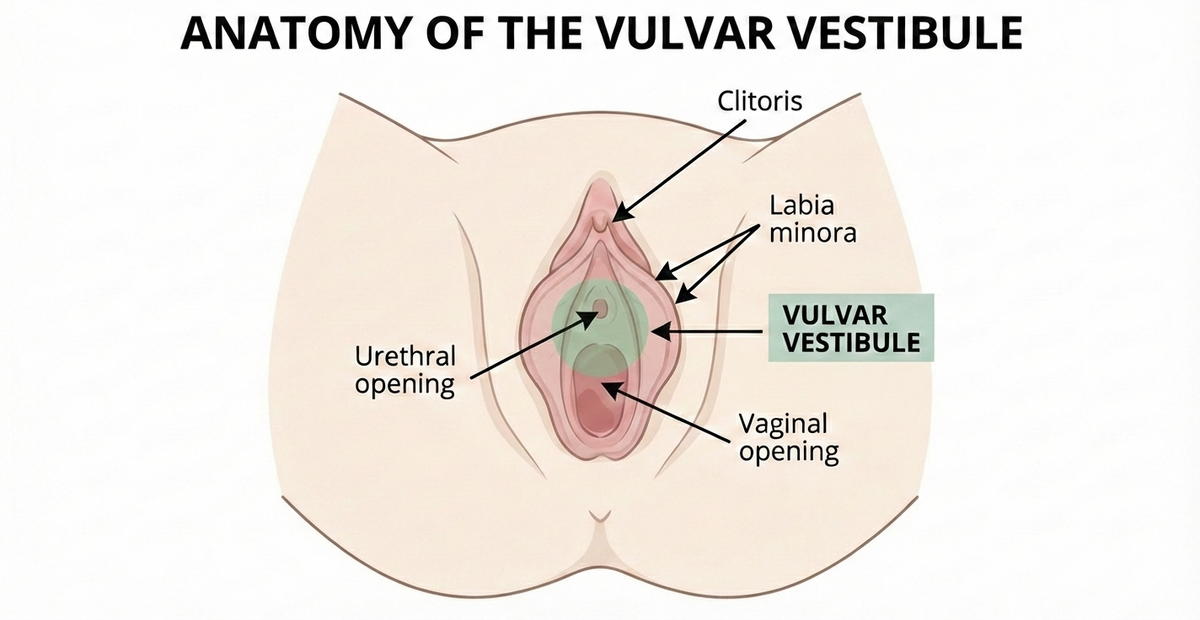
This tissue:
- Contains dense nerve endings
- Has high concentrations of estrogen and testosterone receptors
- Relies on adequate blood flow and lubrication
Its job is to stretch comfortably, tolerate friction, and participate in arousal.
When hormones are sufficient, the tissue is supple and resilient.When hormones fall, its structure and function change.
Why Hormones Matter So Much Here
Estrogen and testosterone help maintain:
- Tissue thickness
- Elasticity
- Moisture
- Blood supply
- Nerve health
Loss of hormonal signaling leads to:
- Thinner tissue
- Reduced lubrication
- Increased sensitivity
- Micro-injury with friction
Even gentle touch can begin to feel burning or sharp. This is the type of pain some women interpret as a UTI during menopause, when in fact it is inflamed tissue in the absence of a true urinary tract infection.
Situations That Commonly Create Vestibular Hormone Deficiency
Perimenopause and Menopause
During midlife, estrogen becomes erratic and testosterone gradually declines. Even before full menopause, tissue-level hormone exposure may already be insufficient.
Many women notice pain years before periods stop.
Hormonal Birth Control
Many oral contraceptives:
- Suppress ovarian testosterone production
- Increase sex hormone–binding globulin (SHBG)
- Lower free (active) testosterone
Synthetic estrogens in pills do not nourish genital tissue the same way as natural estradiol.
Result: local tissue hormone deficiency despite “being on hormones.”
Postpartum and Breastfeeding
After childbirth:
- Estrogen drops sharply
- Testosterone may be low
- Breastfeeding further suppresses estrogen
This creates a low-hormone environment similar to menopause, even in young women.
How Vestibular Hormone Deficiency Feels
Common descriptions include:
- Burning at the urethral and/or vaginal opening
- Stinging or rawness
- Pain with initial penetration
- Pain inserting tampons
- Pain with urination
- Localized tenderness to touch
- Discomfort with tight clothing
Internal pelvic exams are often normal. Urine cultures are frequently negative.
Why It’s Often Misdiagnosed
Because the tissue looks subtlety changed (or sometimes normal), symptoms are frequently labeled as:
- Recurrent yeast infections
- Chronic UTIs
- Vulvodynia without a cause
- Anxiety-related pain
Without addressing hormones, symptoms persist.
Estrogen’s Role
Estrogen supports:
- Tissue thickness
- Lubrication
- Collagen
- Blood flow
Low estrogen leads to thinning, dryness, and fragility.
Testosterone’s Role
Testosterone supports:
- Genital blood flow
- Tissue resilience
- Nerve sensitivity
- Arousal response
Low testosterone increases vulnerability to pain and reduces tolerance to friction.
Testosterone is essential for female genital health.
How Targeted Treatment Helps
When appropriate, treatment may include:
Local Vaginal Estrogen
Improves thickness, moisture, and tissue integrity.
Vaginal DHEA
Converts locally into estrogen and testosterone inside the tissue.
Low-Dose Testosterone (local or systemic in selected patients)
Improves blood flow and tissue resilience.
Systemic Estradiol (when indicated)
Supports overall genital tissue health.
These therapies address the root cause rather than masking symptoms.
Supportive Measures That Enhance Healing

- Pelvic floor physical therapy
- High-quality lubricants and moisturizers
- Avoiding fragranced soaps and irritants
- Adequate hydration
Hormones + tissue support work best together.
What This Means for You
Pain at the urethral and/or vaginal opening is not “just aging.” It is not imagined. It is not something you have to live with.
It is often a local hormone deficiency problem — and it can be treated.
The Takeaway
The vulvar vestibule tissue at the urethral/vaginal opening depends on estrogen and testosterone to remain healthy.
When hormones decline (midlife, postpartum, or on certain birth control), this tissue can become the source of pain.
With proper evaluation and individualized treatment, many women experience:
- Reduced pain
- Improved comfort
- Improved arousal
- Return of pleasurable intimacy
Ready to Explore Root-Cause Solutions?
At Your Functional Health, we specialize in hormone-driven causes of vulvar and vaginal pain and create personalized treatment plans based on physiology — not guesswork.
If sex has become painful, you deserve answers and real solutions.
Book your discovery call today here, or
Book your hormone appointment here
This article is for education only and isn't medical advice. Talk with your own clinician before changing medications or supplements.